How to Handle Your Student Loan Forgiveness 1099-C Tax Form
Student loan forgiveness can eliminate a substantial balance, but it might also create an unexpected tax bill.The temporary federal tax exemption created by the American Rescue Plan Act expired December 31, 2025.As a result, federal student loan debt forgiven through an income-driven repayment (IDR) plan in 2026 or later is generally treated as taxable income.But what happens when your student loan balance is forgiven? Chances are, if you receive any type of loan forgiveness, you’ll receive a Form 1099-C, letting you know how much you received in forgiveness — and how it might impact your taxable income.
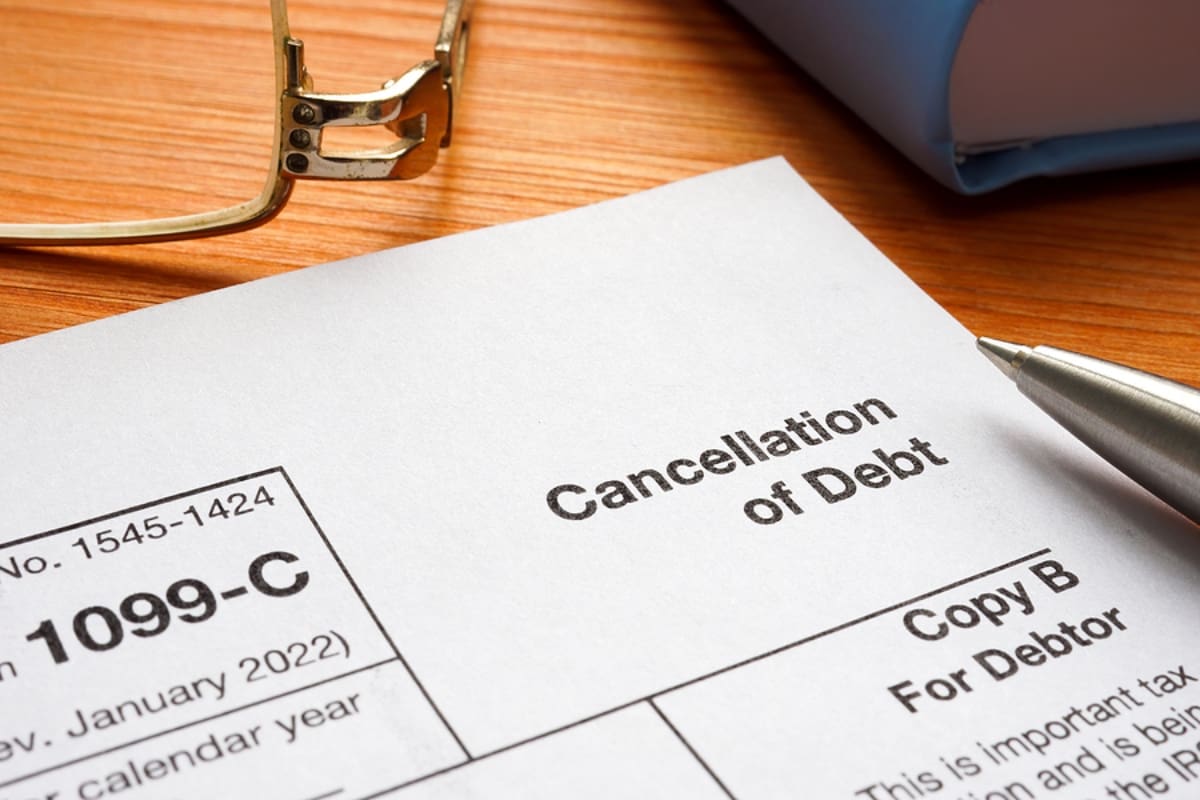
Let’s examine whether you might receive a 1099-C and how it impacts your tax bill.What’s Form 1099-C? When you receive any type of debt forgiveness for more than $600, the creditor is supposed to send you a Form 1099-C.You’ll find, in box 2, an amount of tax forgiven, and you need to enter that amount on your tax return marked “other income.” The IRS generally considers forgiven debt as income for tax purposes.When you experience any forgiven amount of debt, you run the risk of being hit with a “tax bomb”.
Your amount of reportable income can potentially lead to paying taxes on a higher amount of money than you earned in wages.After filling out your tax form, you might find that you owe a large amount in taxes.Depending on how much is discharged, you could even be moved into another tax bracket.For example, if you have $50,000 in debt discharged and your normal taxable income is $40,000, your gross income is now $90,000. If you’re single, this puts you in the 24% tax bracket instead of in the 12% tax bracket.
According to 2022 tax tables, in this example, that would put your tax bill at $15,442 rather than $4,598.You can see some reductions due to tax deductions and tax credits, but if you don’t see changes, there’s a chance your canceled debt could result in a bigger tax bill.What to do if you get a 1099-C If you receive a 1099-C, double-check the information on it for accuracy.Ensure the information provided by loan servicers matches your records and that your loan payments were properly recorded.
Next, find out what your options are.Sometimes, your debt might be tax-exempt, and you won’t have to pay taxes.For example, some types of student loan forgiveness, like Public Service Loan Forgiveness (PSLF) are tax-free.Additionally, the American Rescue Plan Act made student loan forgiveness tax-free through tax year 2025.
So, if you met all of the requirements for forgiveness by December 31, 2025, your discharged balance remains federally tax-free even if the discharge was processed later in early 2026.But if you became eligible for IDR forgiveness in 2026 or later, the forgiven balance will generally be treated as taxable income.Realize, too, that Form 1099-C is no longer required for student loan cancellation due to death or permanent disability.If your student debt relief came because of permanent disability, you shouldn’t have received a 1099-C, and you need to contact the issuer to have the form amended.
Look to see if maybe your particular debt is exempt from federal income tax — at least for now.How a 1099-C impacts your taxes The 1099-C impacts your taxes based on different circumstances.For example, you might be stuck paying additional taxes due to state income tax rules.State treatment varies by location and type of discharge.
Therefore, even student loan forgiveness that is exempt from federal income tax could potentially be taxable at the state level.In general, though, most types of forgiven debt are subject to federal and state taxes unless a specific exception or exclusion applies.Do you pay taxes on forgiven student loan debt? The type of student loan discharge impacts whether you pay taxes on the debt.For example, PSLF and permanent disability results in no federal tax bill.
However, most other types of canceled student loan debt are taxable, including the forgiveness that comes from income-driven repayment plans.What if you can’t pay the taxes due? If you can’t pay your taxes, one option is setting up a payment plan with the IRS.If you owe less than $50,000 in taxes, you can set up a long-term payment plan to make installments.You’ll still be charged penalties and interest and pay a setup fee, but the cost might be less than using a high-interest loan to pay your tax liability.
Understand insolvency Another option, if you can’t pay your taxes, is to claim insolvency.If your total liabilities exceed your income, you can claim to be insolvent.In that case, you might be able to avoid the tax bomb associated with canceled debt.The IRS will let you exempt forgiven debt from your income if you’re insolvent.
How to prepare for the eventual tax bomb When it comes to preparing for a potential tax bomb, especially if you have federal student loans and are on a payment plan that could lead to taxable forgiveness in 2026 or later, you should prepare ahead of time.Use our student loan calculator to see how much you should save to cover the tax bomb.Some other steps you can take include: Minimizing your taxable balance. Consider how to minimize your taxable balance later.Accrued interest is included in your forgiveness amount, so paying interest as you go can reduce that total — and your total tax paid.
However, that could lead to paying more on your loan overall during the course of the loan.Carefully consider how to proceed since that could change the calculation based on your situation.Watch for interest capitalization. Depending on your loans and repayment plan, unpaid interest might be added to your principal balance after certain events.Because capitalization rules vary by plan and loan type, review the consequences before changing repayment plans or consolidating your loans.
Save up money. Finally, consider saving up money to cover the tax bomb at the end.If you’re prepared, the tax burden might not be as bad.Paying interest as you go might make sense in some situations if you want to lower the balance that could eventually be forgiven.However, making extra payments solely to reduce a future tax bill could cause you to spend more overall.
Compare your total projected payments and tax liability before deciding how to proceed.You can review your options and get customized help to prepare for a 1099-C by speaking with one of our financial professionals.Schedule a student debt consultation today.
Publisher: Source link



![[OR, CA, NV] Sage Credit Union $250 Checking Bonus](https://www.mycardopinions.com/wp-content/uploads/2026/09/OR-CA-NV-Sage-Credit-Union-250-Checking-Bonus.png)