Federal Loan Repayment Plans That Qualify for PSLF
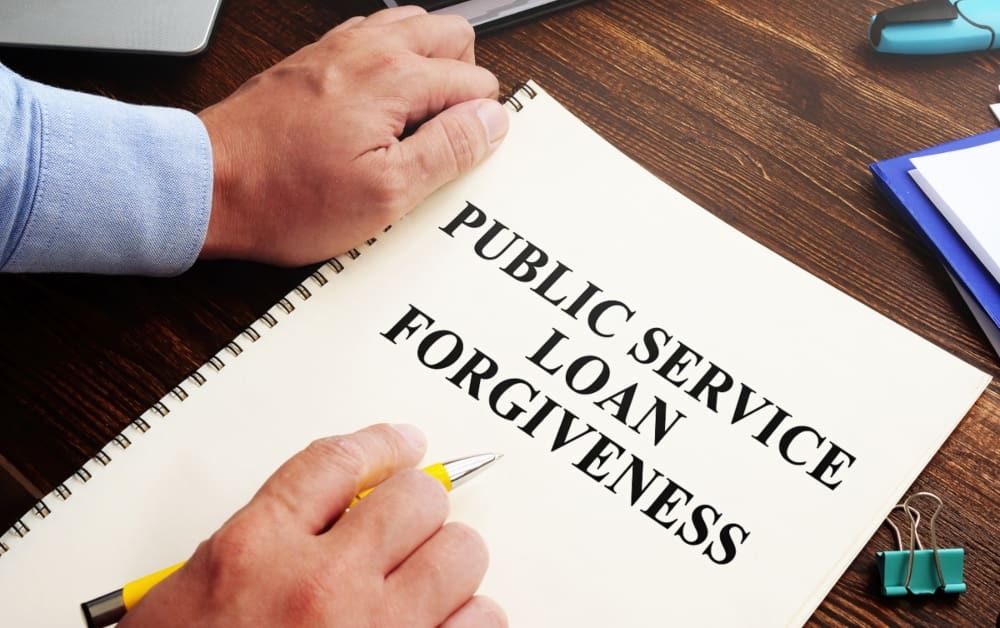
If you’ve committed your life to public service and have federal student loans, you might be eligible for the Public Service Loan Forgiveness program (PSLF).This loan forgiveness program lets you wipe out your debt after 10 years of payments while working for a qualifying employer.
You also must meet other eligibility requirements while being on a qualifying student loan repayment plan.However, each PSLF repayment plan has different features.Figuring out which one offers the lowest monthly payment isn’t always straightforward.
Here’s what you need to know. How to qualify for Public Service Loan Forgiveness The Public Service Loan Forgiveness program incentivizes working professionals to pursue a career in public service.In exchange, the program forgives your remaining federal student loan balance after making 120 monthly payments during your service. To qualify for this benefit, you must meet certain eligibility requirements: You have loans in the federal Direct Loan program (you might be able to use a Direct Consolidation Loan to qualify).You work at an eligible nonprofit or other government organization.You’re employed full-time, at least 30 hours. You’re enrolled in a qualifying repayment plan. You make 120 monthly payments while employed in public service. Aside from being a PSLF requirement, it’s crucial that you’re on the right repayment plan so you get the most out of the program.
Choosing a plan that offers the lowest monthly payment means that you’ll have a higher loan balance that’s forgiven after 10 years. Qualifying repayment plans under PSLF The 10-year Standard Repayment Plan and the current income-driven repayment (IDR) options qualify for the Public Service Loan Forgiveness program. 10-year Standard Repayment Plan Technically the 10-year Standard Repayment Plan is an option under PSLF guidelines.However, this isn’t a true option if you’re working toward forgiveness.Why? A Standard Repayment Plan is designed to pay off your loans in 10 years.If you pay off your loans in 10 years, you won’t have a remaining balance left to forgive once you’re eligible for PSLF. Also, it’s important to note that the Standard Repayment Plan for Direct Consolidation Loans doesn’t qualify for PSLF.
Income-Based Repayment (IBR) The Income-Based Repayment Plan is eligible for PSLF.Its financial hardship component was removed in 2025, making it available to more borrowers than in the past.If you qualify for IBR: Payments are between 10% to 15% of your income and won’t exceed what you’d pay on the Standard Repayment Plan. New borrowers from July 1, 2014, or later pay 10% of their discretionary income. If you borrowed before July 1, 2014, you’ll pay 15% of your income. New borrowers from July 1, 2014, or later will reach IDR forgiveness after 20 years. If you borrowed before July 1, 2014, IDR forgiveness is after 25 years. What you pay under IBR varies based on whether you’re considered a new borrower.For example, if you’re not a new borrower, you’ll pay 15% of your discretionary income.
It also affects the IDR forgiveness timeline.However, this is a moot point if you’re going after PSLF since your loans will be forgiven after 10 years.Repayment Assistance Plan (RAP) The new Repayment Assistance Plan became available July 1, 2026.For new borrowers, it'll be the only income-driven option available.
Whereas, existing borrowers may have access to other IDR plans, depending on when they initially borrowed and whether they take out any new loans going forward.Under RAP: Monthly payments are generally based on 1% to 10% of your adjusted gross income, depending on your income level ($10 minimum payment required).Monthly payments don't have a cap based on the Standard Repayment Plan.Borrowers pursuing IDR forgiveness receive loan forgiveness after 30 years.
For borrowers pursuing PSLF, the longer IDR forgiveness timeline isn't a concern since any remaining balance is forgiven after 10 years of qualifying public service.However, borrowers who leave public service may find RAP less attractive than IBR because it requires a longer path to IDR forgiveness.Pay As You Earn (PAYE) The Pay As You Earn Plan also qualifies for PSLF and has some important eligibility requirements. However, PAYE is scheduled to sunset on July 1, 2028, after which it will no longer be available.To qualify for PAYE, you must: Have a partial financial hardship.
Be a new borrower under the program's eligibility rules.To qualify, you can’t have an outstanding Direct Loan or FFEL balance before receiving a loan on or after October 1, 2007.Additionally, you have received a disbursement of unsubsidized Direct Loans, subsidized Direct loans, or Grad PLUS Loans on or after October 1, 2011. If you’re approved: You’ll pay 10% of your discretionary income, which has a cap on what you might pay on a Standard Repayment Plan. The repayment term is 20 years for IDR forgiveness. Individual income is used if you’re married, but filing separately.Joint income is used if you’re married and filing a joint tax return.
Joint income might affect your eligibility.If you're already enrolled in PAYE and working toward PSLF, you can continue on the plan until it's no longer available.Income Contingent Repayment (ICR) The Income-Contingent Repayment Plan falls under the umbrella of income-driven repayment plans but is generally the least-favored option.That’s because, under this plan, borrowers pay the highest percentage of their discretionary income at 20%.
For those not pursuing PSLF, qualifying for IDR forgiveness under this plan takes 25 years. Though you get forgiveness in 10 years under PSLF, paying 20% of your discretionary income toward loan payments can be hard to manage.Also, it doesn't make sense if you’re pursuing forgiveness. Historically, ICR was primarily used by Parent PLUS borrowers who consolidated their loans into a Direct Consolidation Loan, since it was the only income-driven repayment plan available to them.However, borrowers who take out new Parent PLUS Loans or consolidate after June 30, 2026 are no longer eligible for ICR or any other income-driven repayment plan.Additionally, the ICR plan is set to sunset alongside the PAYE plan on July 1, 2028.
PSLF improvements corrected many past mistakes Many of the problems that caused borrowers to miss out on PSLF credit have already been addressed through the Limited PSLF Waiver and the one-time IDR Account Adjustment.These temporary initiatives gave borrowers credit for many past repayment periods that previously didn't count, including certain months spent on the wrong repayment plan, in long-term forbearance, or with older federal loan programs after consolidation.As a result, millions of borrowers received additional qualifying payment credit, and some reached forgiveness years earlier than expected.Choosing the best PSLF repayment plan If you’re an eligible candidate for PSLF, explore which option lets you pay the least toward your student debt to stay in good standing as you work toward loan forgiveness.
Since forgiven debt under PSLF doesn’t have tax consequences, you don’t have to worry about having an inflated balance forgiven. Compare each IDR plan using our Student Loan Repayment Calculator.Consider the following details: Monthly budget.Spouse’s income.Tax filing status (filing jointly will include spouse’s income in the calculation, separately won’t).
Repayment plan availability (as some are getting phased out later).IDR forgiveness options if you no longer want to go after PSLF. You can also use StudentAid.gov’s PSLF Help Tool or its Loan Simulator to get insight into which plan might work for you. Next steps for PSLF The Public Service Loan Forgiveness program provides additional benefits to public service workers in the form of forgiveness.But there are some specific rules to follow to ensure you’re eligible. Stick to IDR plans since these plans generally produce the lowest monthly payments and maximize the amount forgiven through PSLF.Be sure to run calculations and review your goals, so you’re on the right plan for your situation.
If you need support navigating the complexities of PSLF, get a custom student loan plan from one of our experts.FAQs: Qualifying PSLF repayment plans If you’re looking for information on PSLF, here are some answers to the most frequently asked questions. What type of repayment plan must you be in to qualify for PSLF? For PSLF eligibility, borrowers must enroll in an income-driven plan.Eligible plans include Income-Based Repayment (IBR), Repayment Assistance Plan (RAP), Pay As You Earn (PAYE), and Income-Contingent Repayment (ICR).The 10-year Standard Repayment Plan also qualifies, but you'll fully repay your balance by the time you qualify for forgiveness.
What is the best repayment plan for PSLF? The best repayment plan for the PSLF program depends on your goals, tax-filing status and budget.In general, the goal is to choose the qualifying repayment plan with the lowest monthly payment, so the largest possible balance is forgiven after 120 qualifying payments.For many existing borrowers, IBR remains the preferred option, while newer borrowers may only have access to RAP.What are the new rules for PSLF? Recent changes to the PSLF program made it easier for borrowers to receive credit toward forgiveness.
The Limited PSLF Waiver and the one-time IDR Account Adjustment corrected many past servicing and repayment errors by giving borrowers credit for additional repayment periods that previously didn't qualify.While those temporary initiatives have ended, many borrowers have already benefited from the extra qualifying payment credit they provided.Can you switch repayment plans for PSLF? Yes.You can switch repayment plans for PSLF as long as the new plan is a qualifying repayment plan, such as those under income-driven repayment (IDR).
Discuss your repayment loan options with your loan servicer.
Publisher: Source link